The Law and the Gospel
1 Timothy 1:8-15
Exploring the proper use of the law and the 'trustworthy saying' that Christ Jesus came into the world to save sinners.
We are the only people in the world that's actually got good news.
Have you ever wondered what the law is actually for? Is it just a list of rules to keep us in line, or is there something deeper going on? And what about all the ways we see it being misused today — does that mean the law itself is broken? This Bible study dives into 1 Timothy 1:8–15 and tackles these questions head on. What does God’s law say about the state of the world around us? Why does Paul rattle off such a striking list of sinners — and what does any of it have to do with us? Most importantly, if the law exposes our failings, where does that leave us? The answer, it turns out, is somewhere far better than we might expect.
Now we know that the law is good, if one uses it lawfully, 1 Timothy 1:8
We are the only people in the world that's actually got good news.
- The law is good — it is designed to show up our shortcomings, remind us of our guilt before God, and point us toward the need for a Saviour.
- The law serves as protection — it sets boundaries for our safety and well-being, much like a highway code for society.
- The law establishes limits — it provides guidance and order, preventing social chaos.
- The law is being misused in modern times — particularly in ways that attack Christian values and personal freedoms.
- The law is not made for the righteous, but for the lawless — those who know what is right and deliberately choose to break it (‘anomai’).
- A lack of moral standards is a growing sign of the times — the only rule many people seem to follow is ‘not getting caught.’
- Unholiness (Anasosoi) describes those who violate the ultimate decencies of life — behaviours considered contrary to the natural and eternal order.
- Profanity/pollution — described as soiling everything one touches, showing disdain for both people and the things of God.
- Murder (androphonia) — the text distinguishes clearly between unlawful killing and justified acts such as war or lawful capital punishment.
- Slave trading — condemned as a vile exploitation of human beings, noted as still ongoing in various parts of the world.
- Lying and perjury — those who twist the truth for dishonourable ends fall under the condemnation of the law.
- The gospel stands in contrast to all of this — described as a ‘glorious gospel,’ it is the only truly good news in the world.
- The gospel comes from God, not from man — though it is carried through human witnesses, its source is entirely divine.
- Christians are called to be witnesses — not necessarily evangelists, but those who share the truth when opportunities arise.
- Active outreach matters — churches that engage in consistent and persistent evangelism, such as door-to-door visitation, see real growth.
- God’s love prevails and changes people — Paul himself, once the chief of sinners, was transformed by it.
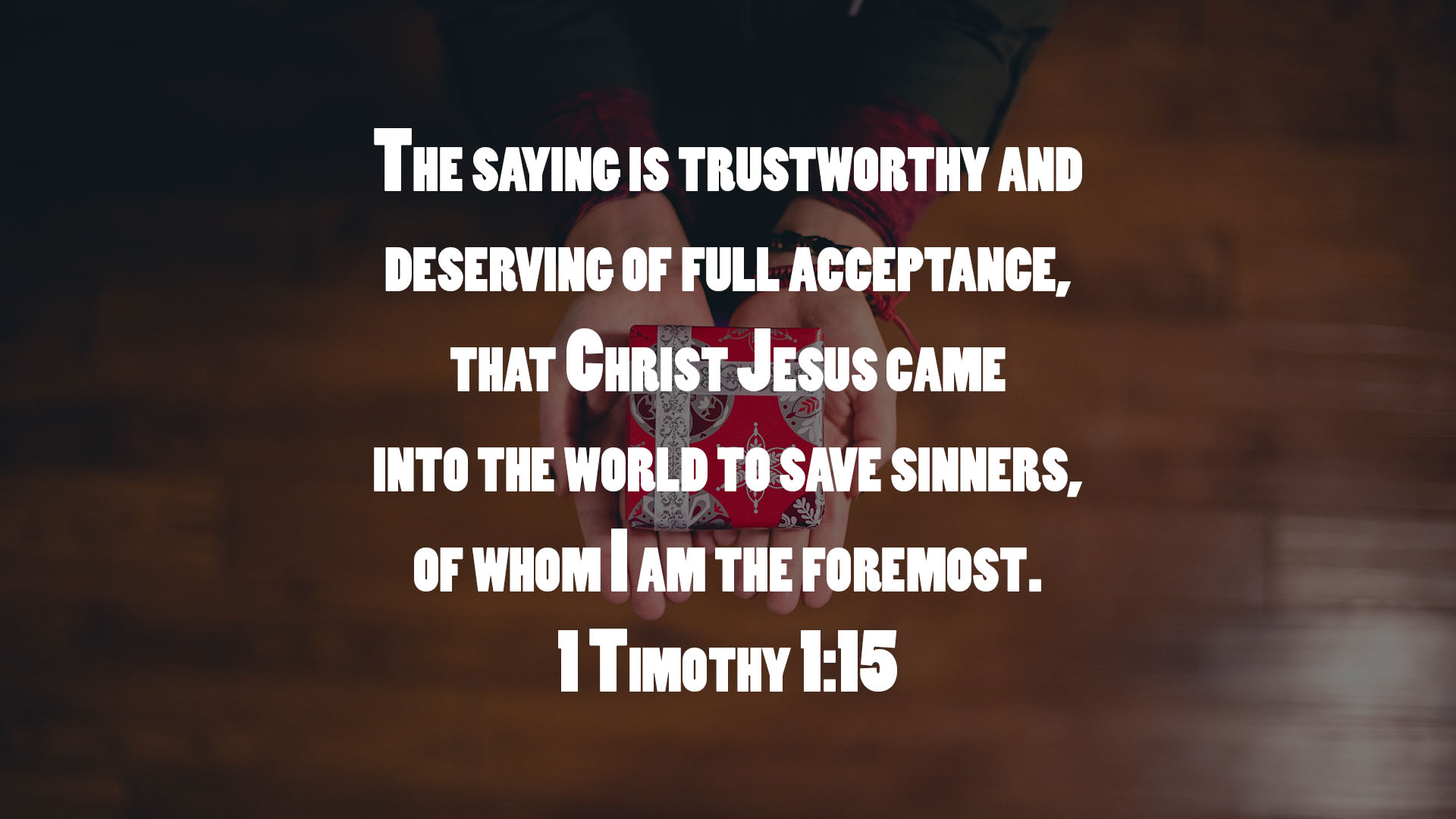
The saying is trustworthy and deserving of full acceptance, that Christ Jesus came into the world to save sinners, of whom I am the foremost. 1 Timothy 1:15
We can be free to walk in fellowship with God.
Yes, the law covers some pretty heavy ground — lawlessness, immorality, violence, greed — and honestly, looking at the world around us today, it’s not hard to see why Paul’s words feel as relevant now as ever. But here’s the thing: none of that is where the study ends. It ends with Jesus. The same Jesus who Paul calls the King eternal, immortal, invisible — the one who came into the world specifically to save sinners, and not just any sinners, but the very worst of them. Paul counted himself chief among them, and yet there he is, utterly transformed. That’s the beauty of it all. Jesus doesn’t just point out the problem — he is the answer to it. The law may show us our need, but it’s Jesus who meets it. And that really is glorious news.
- 1 Timothy 1:8-15
- John 3:3
- John 3:7
- 1 Corinthians 6:11
Bible References
Study Details
The Law and the Gospel within the series Household of Faith.
Given by G. Stoves, on 2026-03-03.
Household of Faith

At the center of this letter is the "mystery of godliness"—the profound reality of God appearing in the flesh, vindicated by the Spirit, and proclaimed among the nations. Paul writes to Timothy not just to organize a meeting, but to protect the purity of the Gospel, ensuring that the community remains a "pillar and buttress of the truth." By exploring this book, we are invited to see Jesus as the one Mediator between God and humanity, whose grace is sufficient to transform even the "foremost of sinners" into a vessel of honor.
Online GOI Bible Studies

GOI online bible studies are a free way of learning more about the good news of the gospel of Jesus Christ. Come and ask questions and discuss how the life of Jesus changes everything.
Psalm 26
The interesting statement in Psalm 26:3 is the Psalmist’s claim to ‘have walked in your truth’ is interesting for a number of reasons.
Firstly, to walk here as in many...

The fifth vision of Zechariah
Through Zechariah 4:1-14 we have recorded the vision of the Golden Candlestick.
In this vision Zechariah sees a golden candlestick with seven lamps. This takes us back in time to...
Online GOI Bible Studies
Contact us now for details of online bible studies this week.