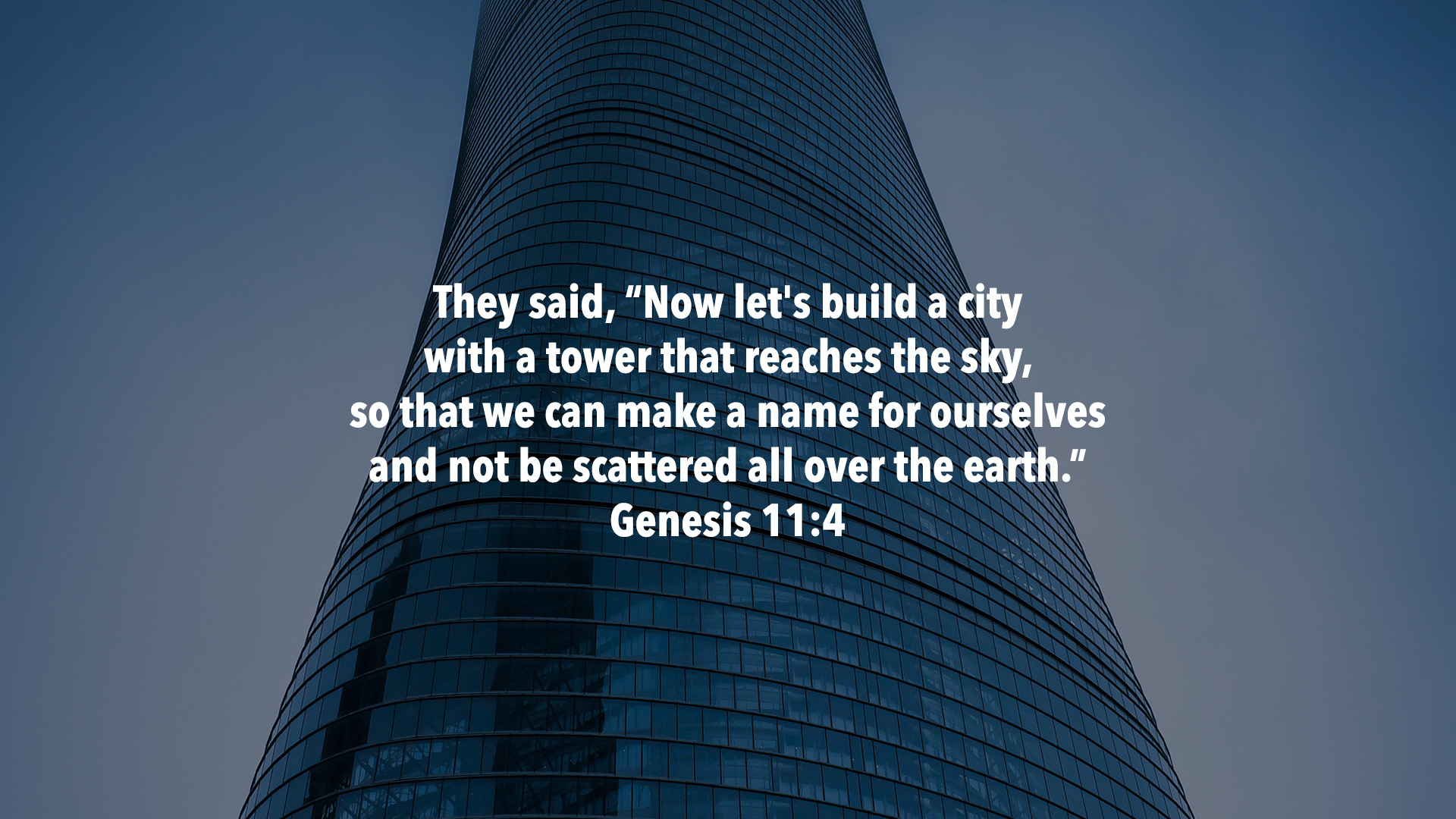
Confusion
Genesis 10-11:
The story of the Tower of Babel reveals humanity's pride and rebellion in attempting to make a name for themselves, leading to the confusion of languages. This event shows our deep need for a way to be unified and reconciled with God, which is only possible through the gospel of Jesus Christ.
Humanity appears to be hopeless at learning from past mistakes.
How does God respond when humanity attempts to rebel against Him and His purposes? This Bible study on Genesis 10-11 explores the aftermath of the flood, examining the dispersion of Noah’s family and the Tower of Babel incident. Through these chapters, we discover how God’s sovereign knowledge and patient love work together to guide humanity, even when we repeatedly fall into the same patterns of rebellion and foolishness.
These are the clans of the sons of Noah, according to their genealogies, in their nations, and from these the nations spread abroad on the earth after the flood. Genesis 10:32
Abraham is the only one man in the Bible who is described as the friend of God. That's amazing. What a privilege. A man, a friend of God.
- The study covers Genesis 10-11, focusing on seven main themes: the family of Noah, family dispersion, Peleg (a significant character), family separation, the folly of man, God’s complete knowledge, and the introduction to Abraham
- There are 10 generations from Adam to Noah and 10 generations from Noah to Abraham
- Noah’s three sons (Japheth, Ham, and Shem) became the ancestors of different people groups spread across the world
- Japheth’s descendants spread throughout Europe, Persia, and India, with connections to modern nations like Germany, Wales, and Armenia
- The Tower of Babel represents humanity’s recurring mistake of trying to be like God rather than learning from past failures
- God confused the languages at Babel, causing people to separate and disperse across the earth
- Peleg’s name means “divided,” possibly referring to either the language division at Babel or the physical separation of earth’s continents
- Nimrod led the Babel project and was a tyrant and sun worshipper, not just a hunter
- Shem’s line remained separate from the Babel incident and leads directly to Abraham
- Abraham’s family initially stopped in Haran instead of completing their journey to Canaan, demonstrating the folly of stopping halfway in obedience
- God’s knowledge is complete and nothing is hidden from Him
- Abraham is uniquely described as “the friend of God” and represents the hallmark of faith
- Christians should be trusting but not naive, understanding that we live in a fallen world
- We must keep short accounts with God and remain answerable to Him above all human authority
Now these are the generations of Terah. Terah fathered Abram, Nahor, and Haran; and Haran fathered Lot. Genesis 11:27
Humanity appears to be hopeless at learning from past mistakes.
What’s really encouraging here is the reminder that even when we mess up—like Abraham did by stopping in Haran instead of pushing on to where God called him—God doesn’t give up on us. He’s patient, kind, and gentle, always ready to give us another chance. The study highlights something beautiful about Jesus (though He’s not named directly in these Old Testament chapters): God’s desire has always been for our good, not for evil. That same patient, redeeming love we see in how God dealt with Abraham and the people at Babel is the same love shown perfectly in Christ. And here’s the kicker—through faith in Jesus, we become Abraham’s spiritual descendants, inheriting that same friendship with God. Pretty amazing stuff!
- Genesis 10-11:
- Genesis 10
- Genesis 11
- Hebrews 11
- 1 Chronicles 1
Bible References
Study Details
Confusion within the series Created..
Given by G. Stoves, on 2025-11-27.
Created.

When God made human beings, he did something special—he created them in his own image, meaning people are different from all other creatures. God breathed life into Adam and gave him a perfect relationship with his Creator. This shows us that from the very beginning, God wanted to have a close relationship with people, which points forward to how Jesus would later come to restore that broken relationship between God and humanity.
Online GOI Bible Studies
GOI online bible studies are a free way of learning more about the good news of the gospel of Jesus Christ. Come and ask questions and discuss how the life of Jesus changes everything.
Psalm 114
There is one beautiful concept to attract our attention in this short Psalm. This is the question of a sanctuary. Israel was a sanctuary for God once they had been...
The first vision of Zechariah
Through Zechariah 1:7-11 we have recorded the vision of the horseman among the myrtles.
In Zechariah 1:8 and comparing with Zechariah 1:11, Zechariah notices a man riding (missing word) reveals...
Online GOI Bible Studies
Contact us now for details of online bible studies this week.